What are microgreens?
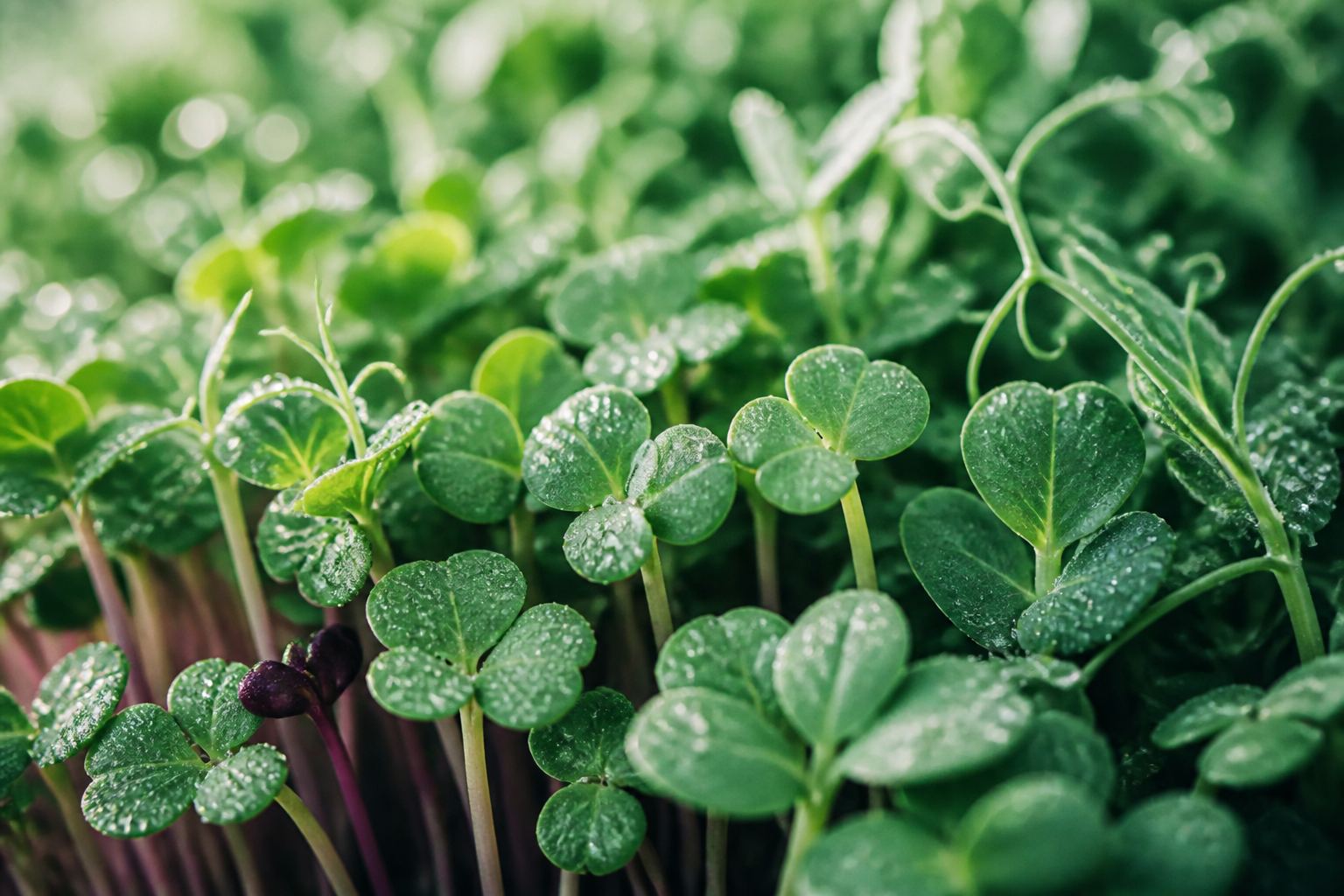
A microgreen is a vegetable harvested seven to fourteen days after germination, once the first true leaves have appeared but long before the plant matures. It is cut above the root, so what you eat is stem and leaf only.
At that moment the seedling still holds the entire nutritional reserve it was given to become a full vegetable, concentrated into a few centimetres. That is the whole idea — you are not eating a garnish, you are eating the plant at its densest point.
Why they aren't sprouts
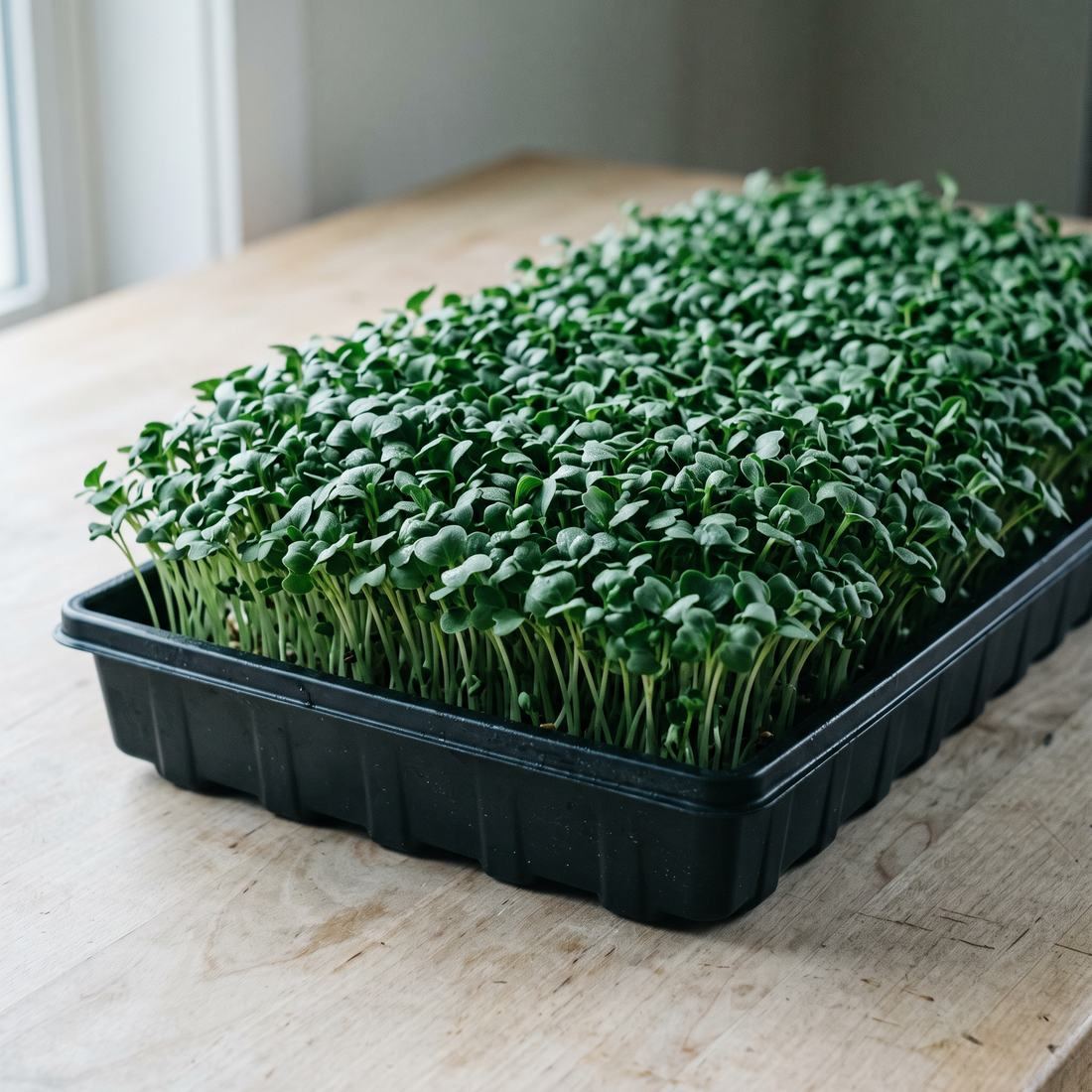
The two are constantly confused, including by people selling them. They are different foods, grown differently, with different risk profiles.
Both are worth eating. We grow both. They just aren't substitutes for each other.
Five reasons to eat them
- ImmunityPolyphenols and antioxidants that fight free radicals.
- MineralsHigher in calcium, magnesium, phosphorus and potassium, and in iron, zinc and copper, than the mature vegetable.
- RecoveryAbsorbable amino acids and chlorophyll, useful after training.
- DigestionLiving enzymes and prebiotic fibre — which only survive if you eat them raw.
- EyesLutein and zeaxanthin, which matter more the longer your working day is spent on a screen.
The flavour table
Varieties that taste nothing alike. Pick by what you're cooking, not by what sounds healthiest.
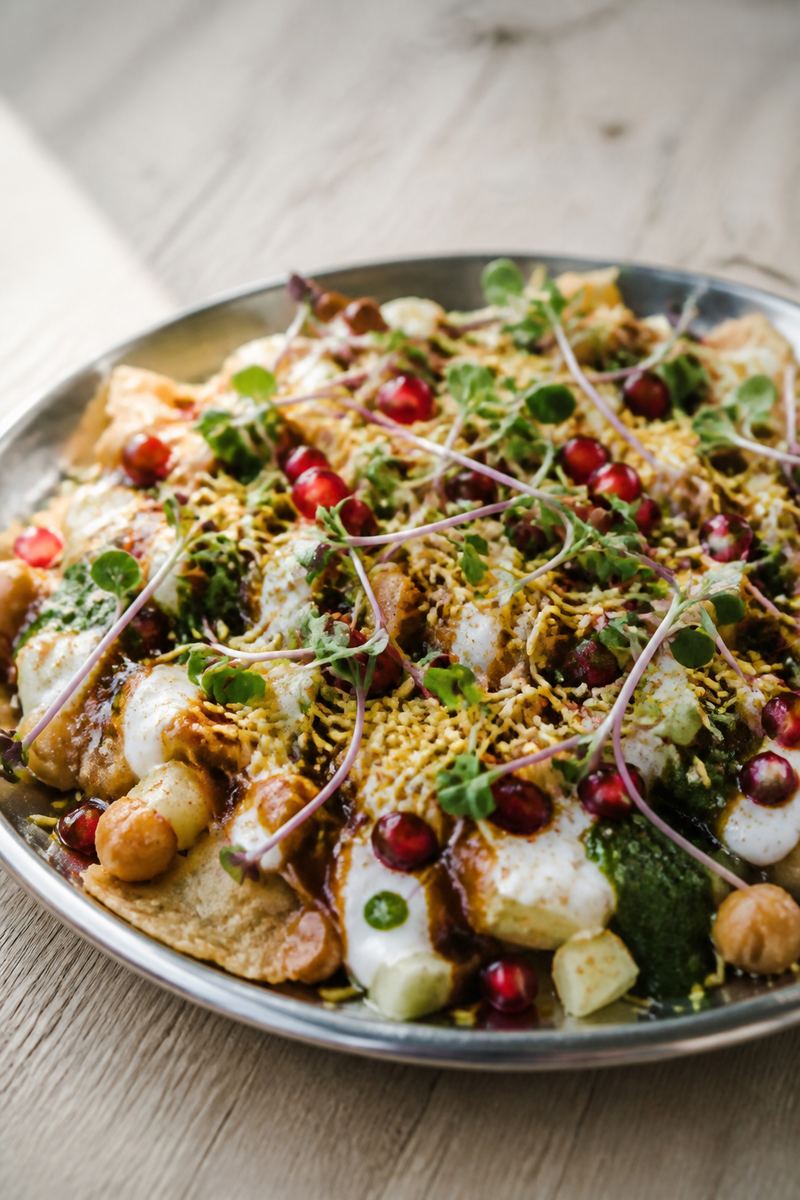
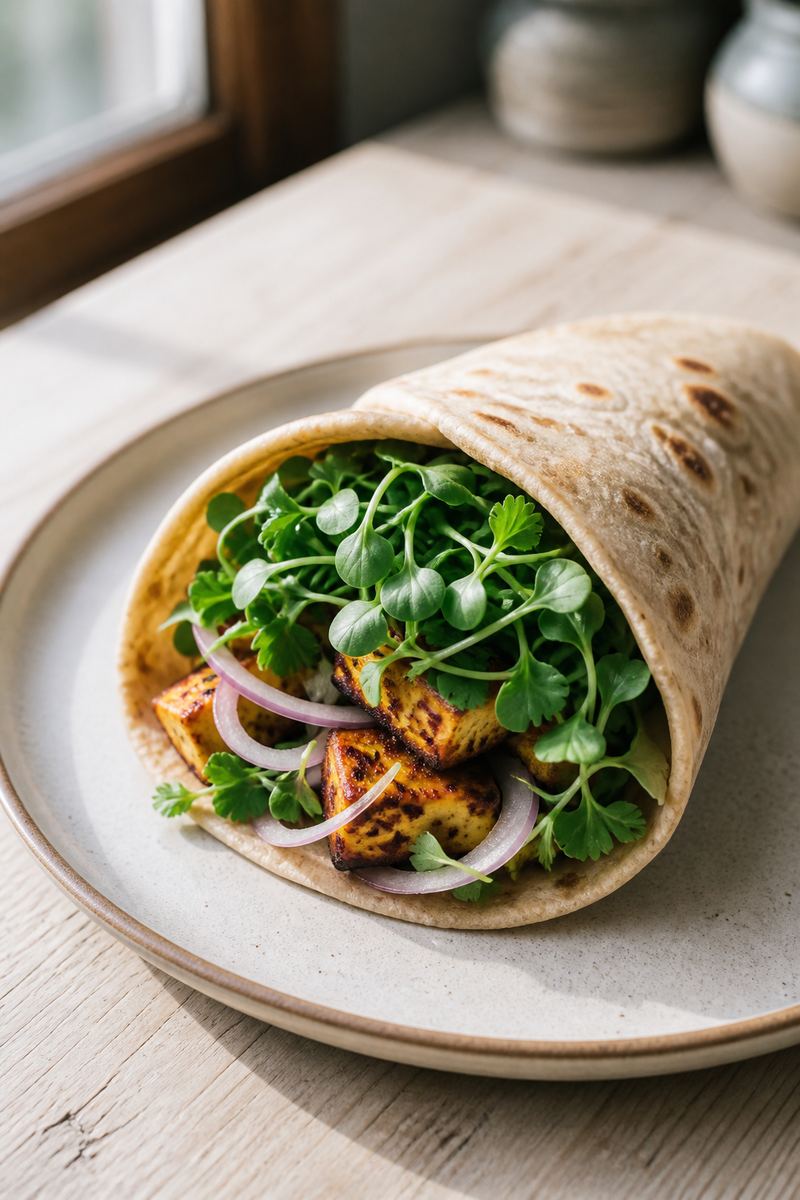
Rich curries, chaat, wraps and paneer tikka.
A salad base in its own right, toast, recovery smoothies.
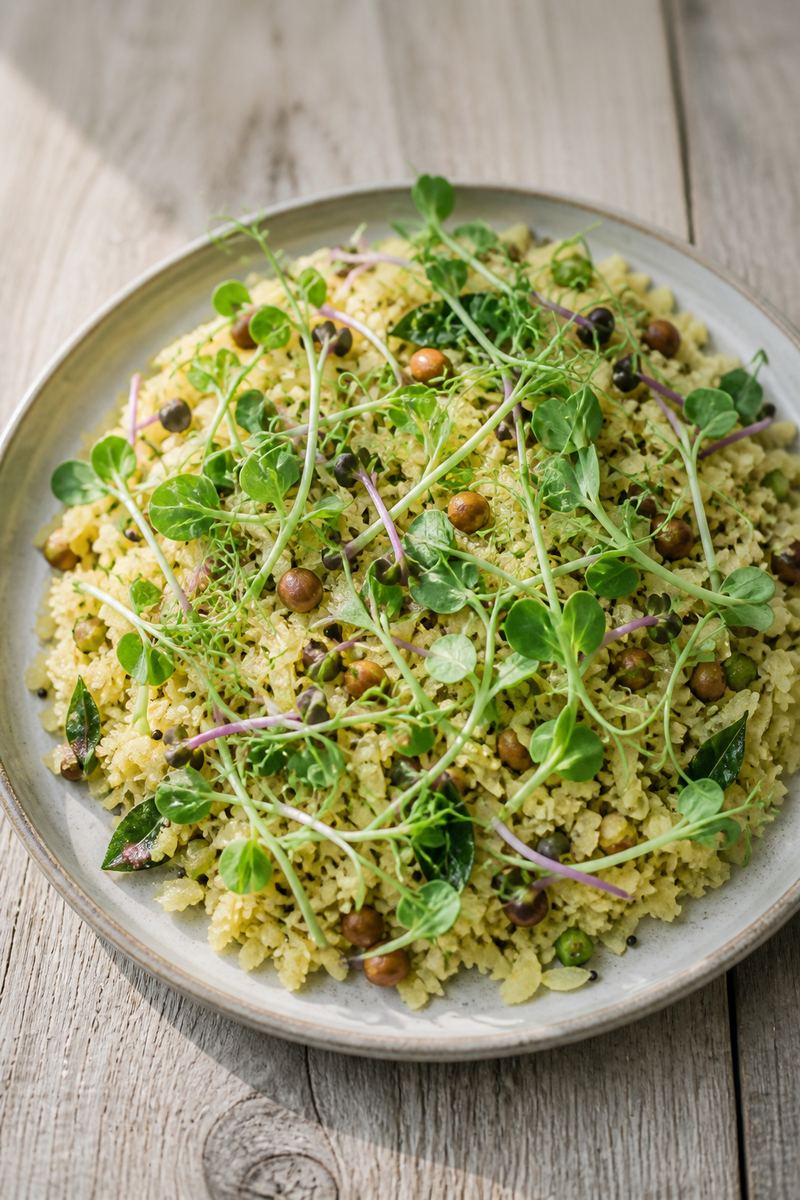
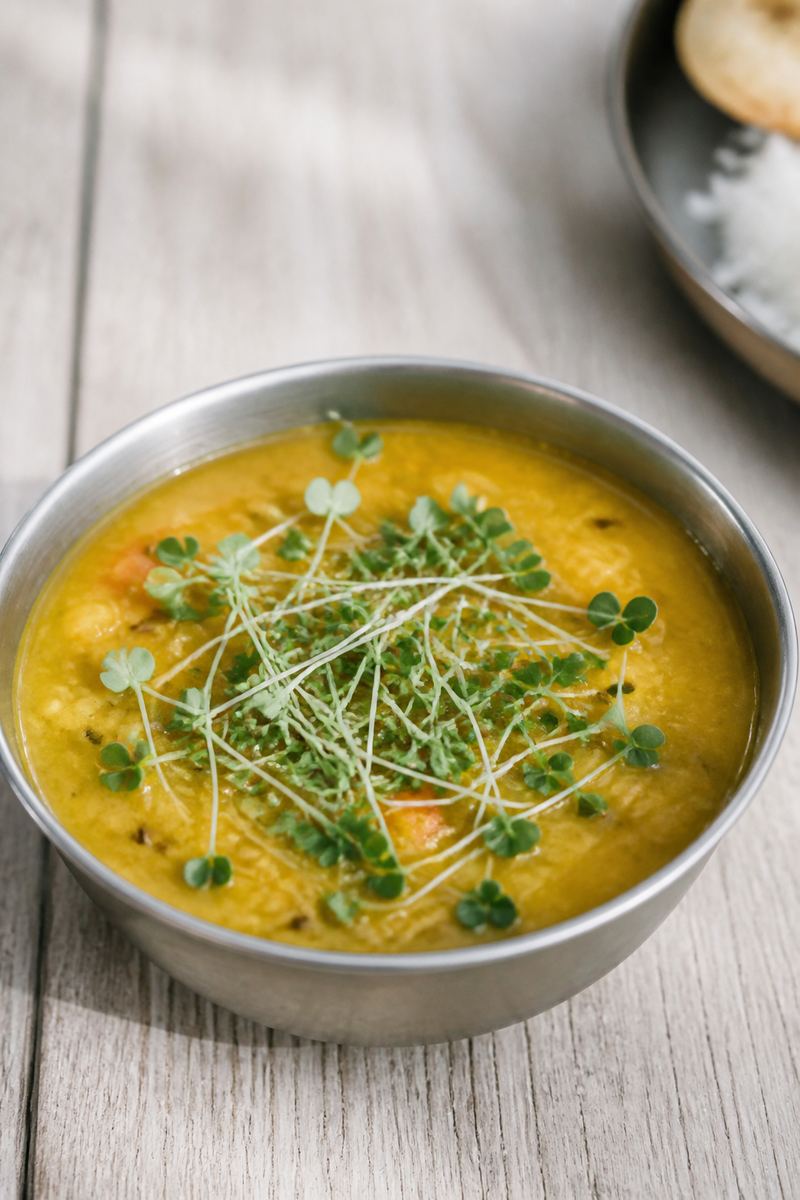
Salads, last-second stir-fries, over dal and pulao.
Simple salads, grilled vegetables and meats, sandwiches.
Children's smoothies, dals, everyday meals.